

On building a healing machine, deciphering cultural chaos, and spatial awareness
In Conversation with Ana Roman: Creative Technologist, DJ, Producer and Guest Lecturer


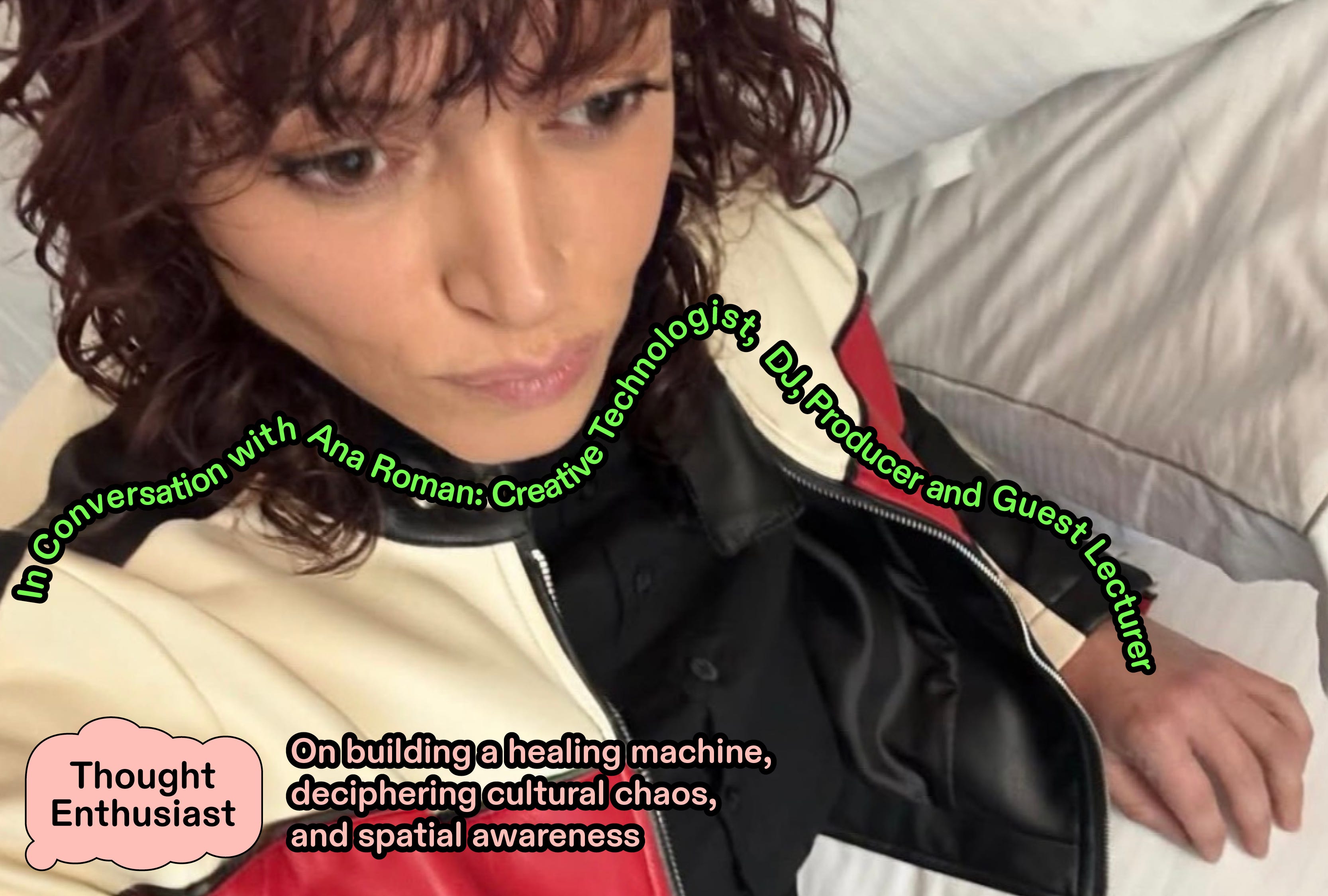
Ana Roman is a creative technologist, DJ, producer, and independent researcher working in the realms of sound, new media, creative code, and ethical generative AI.
Their practice began with my music project Skulptor in 2018, then by 2020 it quickly evolved into a transdisciplinary exploration. Since then, their professional and creative trajectory keeps returning to one question: how do we as humans become fully embodied through technological kinship, not just with our machines, but with our emergent futures? Their independent research on Technological Kinship has led to performance lectures at institutions like ITP NYU, MIT, and Berklee College of Music.
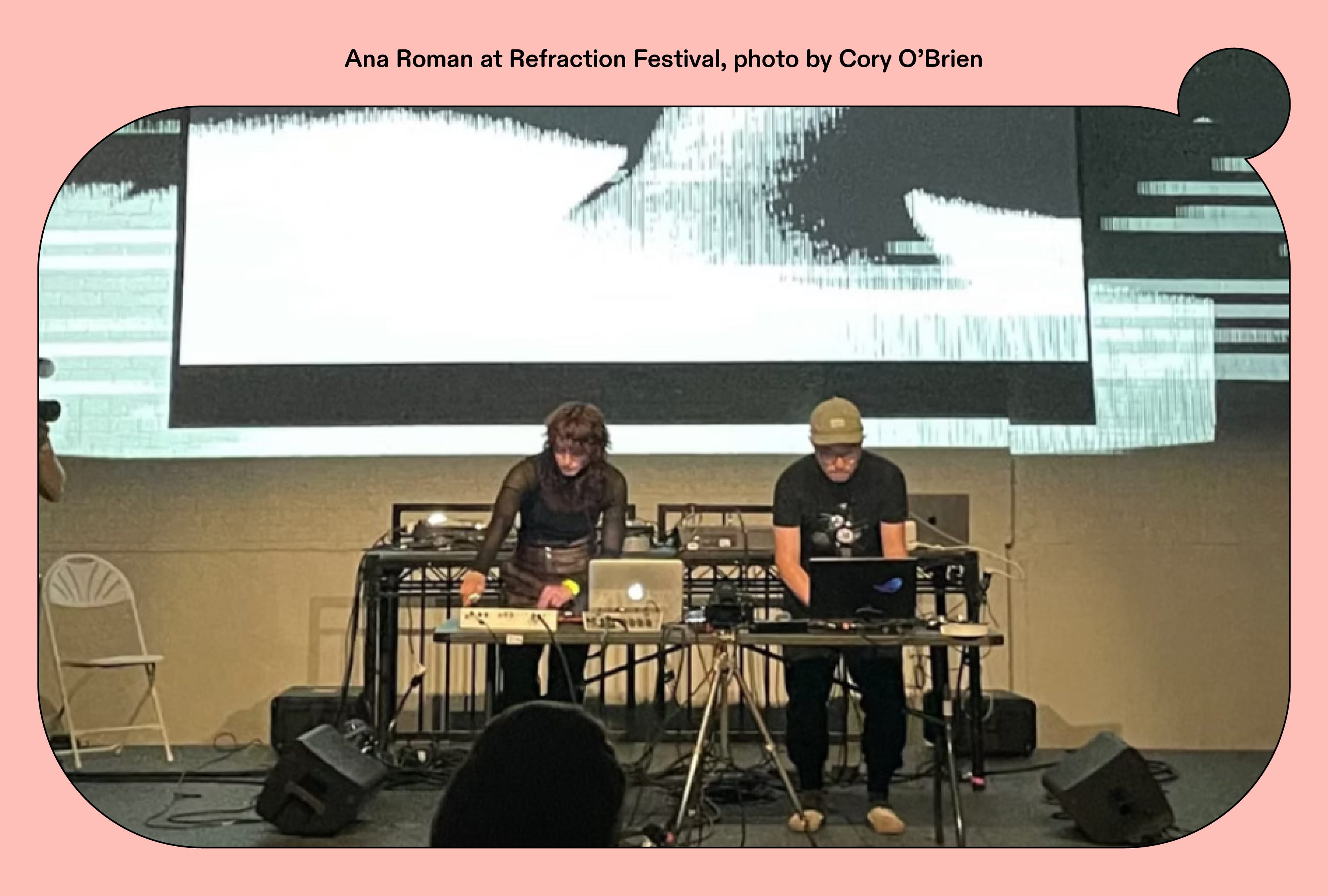
Most Recently they gave a Chicago’s Smart Bar its first Performance Lecture on Cyberfeminism, Dance as Liberation, and Raves as Temporary Autonomous Zones. They’ve given live A/V performances as Skulptor for the Bogotá Experimental Film Festival and at DATLAB NYC hosted by TouchDesigner. These performances tackle and interrogate techno-fascist practices and surveillance capitalism while exposing the ways humanity is disembodied by algorithms of injustice.
Keep up with their latest Cyberfeminist transmissions via their Substack The Digital Body.
🩹🤖 On building a healing machine
I'm building two projects that explore healing through tech. "Permissionless Bodies" is a performance piece that examines our rights to reclaim agency over our physical bodies in systems designed to regulate and enforce bias. The second is a larger expansion of a project I built as a sound installation for Google Creator's Lab called "How to Build A Healing Machine." This project challenges capitalist interfaces in technology tools by proposing that interfaces should inspire and facilitate care, calm, and healing as the antidote to constant optimization and productivity.
⚱️ On last words
My grandmother’s funeral. Shortly before she died she said to me ‘If I could do it all over again, I’d do it just like you.” How’s that for a lasting impact?
🌪️ On deciphering cultural chaos
Death to Stock's Instagram gets me every time. They're not just curating for tastemakers - they're deciphering cultural chaos into actually useful visuals for creators. They track emerging cultural directions like "RAVE AGAINST THE MACHINE" or "SURVEILLANCE DESIGN" rather than reacting to what's already viral. No AI, no filler. It's marketing that doesn't feel like marketing because it's genuinely solving problems while building a visual language that addresses exactly where culture is heading, not where it's been.
🌚 On dream blunt rotations
Some of my favorite collaborators thus far have been with my partner Cory O’Brien, one of the best sound-engineers I’ve ever known and with the curators Eric Lee and Erin Wajufos of Creative Code Art based in NYC.
Additionally, my favorite art collaborator and all-around person I admire is Portrait XO founder of Sound Obsessed, we’ve created many projects and installations together. All these people have had a huge influence on my work as an artist both in nurturing and challenging my outlook and process.
My dream collaboration, blunt rotation or just plain creating art rotation would be ARCA, Anna Uddenburg, DJ Dave, Rosalia and Monamobile. Arca to collab with sonically or on a remix, Anna Uddenburg with joint-installations or performance art, DJ Dave for Audio Reactive performances on stage and music, Rosalia joint track release or remix, and Monabobile to style and set design a video I want to make for my skulptor project.
🛸 On places where people are spatially aware
Silence Please, Nowadays, Public Records, The Whitney, The Sculpture Garden on Elizabeth Street, Climax Books, Salon 94, My local library. What keeps me going is that these spaces bring people together that are spatially aware and read the room whether it’s inside or outside.
🕸️ On cozy web spaces
A hundred times a day I think about artist-owned web spaces and how to build stronger communities that mutually nourish artists and creators. The current infrastructure of music streaming operates as a linear system in a meta-modern world that’s in an anti-fragile liminal state. Collectively owned platforms like Subvert (which I’m proud to be part of) and Metalabel’s groupcore tools for collaborative publishing and shared economics are addressing this by reimagining ownership structures themselves. We need cozy web spaces where artists control the platforms, not algorithms designed to extract our labor.
 | A guest post by
|
I LOVE DJ DAVE!